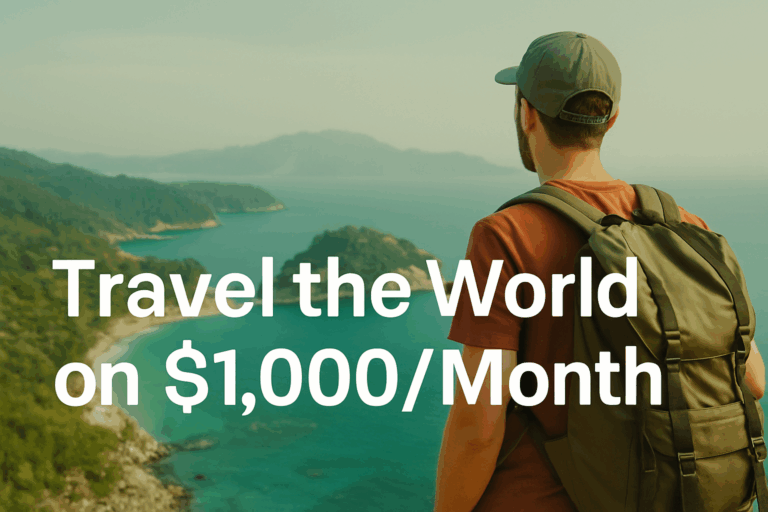
How to Travel the World on a Budget (Complete Guide)
Most people think traveling the world is expensive. I used to believe that too. I thought it was something only rich people, influencers, or full-time travelers could afford. But the truth is simple: you don’t need a lot of money to see the world—you just need the right strategy.
When I started traveling, I made every mistake possible. I booked flights at the wrong time, chose the wrong cities, stayed in overpriced hotels, and spent way too much on food. But over time, I learned a system—a way to travel cheaper, smarter, and longer.
This guide is a combination of everything I’ve learned through budget travel, solo travel, and digital nomad life. It’s part personal story, part blueprint, and part ultimate strategy guide for anyone dreaming of exploring the world without going broke.
If you’re new to budget travel, also read: How to Save Money for Travel.
🏨 Save Money on Accommodation
Compare hotels, apartments, resorts, and vacation rentals from trusted providers worldwide.
Hotels • Apartments • Resorts • Vacation Rentals
Why Budget Travel Works
Travel is more affordable today than ever before. Cheap flights, independent guesthouses, online booking platforms, and remote work opportunities have changed everything.
- Flights are cheaper thanks to low-cost airlines.
- Accommodation is easier with hostels, Airbnbs, homestays, and budget hotels.
- Transportation is cheaper with ride apps, local buses, and trains.
- You can earn money online while traveling (digital nomad lifestyle).
- You have more control than ever over where, when, and how you travel.
Budget travel isn’t about being cheap—it’s about being smart.
Step 1: Choose Budget-Friendly Destinations
Some places are naturally expensive (Switzerland, Japan). Others are incredibly affordable, without sacrificing culture, food, or experiences.
🌏 Best Budget Travel Destinations for 2025
- Thailand — Perfect for beginners, amazing food, cheap transport.
- Vietnam — Beautiful landscapes + extremely budget-friendly.
- Indonesia (Bali) — Digital nomad paradise, affordable villas.
- Mexico — Great food, beaches, culture, low prices.
- Colombia — Colorful cities, nature, and cheap cost of living.
- Georgia — Safe, charming, visa-friendly for nomads.
- Turkey — Stunning coastline + great value.
- Portugal — Perfect for beginners, safe, friendly.
If you want a full breakdown of the cheapest places to live or travel, read: Cheapest Cities for Digital Nomads.
Step 2: Find Cheap Flights (Without Spending Hours Searching)
You don’t need to stalk flight deals every day. You just need the right tools and the right strategy.
🔥 Best Tools for Finding Cheap Flights
- Google Flights — fastest search engine
- Skyscanner — great for flexible routes
- Hopper — price prediction
- Going (Scott’s Cheap Flights) — deal alerts
💡 Cheap Flight Hacks
- Fly on weekdays
- Use “everywhere” search results
- Book 30–60 days in advance
- Fly into cheaper airports nearby
- Use incognito mode
One of my biggest travel moments started because I found a $220 flight to Bali using Google Flights. Sometimes cheap flights lead to the best memories.
Step 3: Choose Budget Accommodation Without Sacrificing Comfort
Accommodation is usually the biggest cost after flights. But with the right approach, you can save hundreds of dollars each month.
🏨 Best Budget-Friendly Options
- Hostels — great for solo travelers + budget trips
- Guesthouses — more privacy, still affordable
- Airbnb rooms — cheaper than full apartments
- Homestays — authentic and low-cost
- Long-term rentals — perfect for digital nomads
💡 Accommodation Hacks
- Stay outside city centers
- Book longer stays for discounts
- Use hostel kitchens to save money
- Travel during shoulder season
- Read reviews carefully
If you’re traveling long-term, check out: Digital Nomad Packing List.
🏨 Save Money on Accommodation
Compare hotels, apartments, resorts, and vacation rentals from trusted providers worldwide.
Hotels • Apartments • Resorts • Vacation Rentals
Step 4: Eat Cheap Without Eating Poorly
Food is where most travelers accidentally overspend. But eating cheap doesn’t mean eating badly.
🍜 Budget Eating Tips
- Eat where locals eat
- Avoid restaurants in tourist areas
- Buy snacks + fruit from markets
- Cook occasionally (hostel kitchens help)
- Try street food—it’s affordable AND delicious
In Southeast Asia, I often ate full meals for under $2. You don’t need fancy restaurants to enjoy the world.
Next: transportation, daily budgeting, free things to do, and how to stretch your travel money MUCH longer.
Step 5: Get Around Cheaply (Transportation Tips That Save You Money)
Transportation can eat up your budget fast if you don’t pay attention. But with the right strategy, it’s one of the easiest areas to save money while traveling the world.
🚍 Cheap Local Transportation Options
- Local buses — the cheapest option in almost every country
- Shared vans — common in Asia and Latin America
- Trams & metro — fast, easy, safe
- Grab / Uber / Bolt — still cheap in many countries
- Walking — the best way to explore
In many places, taxis targeted at tourists cost double or triple local rates. Apps like Grab (Asia) or Bolt (Europe & Mexico) keep prices honest.
✈️ Cheap Long-Distance Transportation
- Buses between cities — cheapest option in Asia & Latin America
- Night buses — save money on accommodation
- Budget airlines — AirAsia, Ryanair, Wizz Air, Viva Aerobus
- Trains — especially in Europe & Japan
Night buses have saved me hundreds of dollars (and some nights of accommodation). Not the most comfortable, but extremely budget-friendly.
For more destination planning tips, check out: Destinations.
Step 6: Do Free (or Extremely Cheap) Activities
You don’t need expensive tours or fancy attractions to have fun while traveling. Some of the best experiences are 100% free.
⭐ Always Free Activities
- Walking tours
- Beaches
- Hiking trails
- Local markets
- Public plazas
- Historic neighborhoods
- Street festivals
My most memorable travel days usually involved nothing more than walking, exploring, and letting the day unfold naturally.
💡 Cheap Paid Activities
- Museums (often $1–$5 in Asia & Latin America)
- Street food tastings
- Local bus tours
- Bike rentals
- Cooking classes (budget-friendly versions)
Avoid overpriced “tourist trap” tours. The best value is always found locally.
Step 7: Create a Daily Budget (Simple System)
You don’t need complicated spreadsheets. You just need a simple structure. Here’s the system I’ve used for years:
💰 Choose Your Daily Limit
- $20/day — extreme budget
- $30–$40/day — Southeast Asia / Latin America
- $50–$70/day — Europe / North America budget travel
- $100+/day — comfortable travel anywhere
Once you choose your number, stick to it. If you overspend one day, spend less the next.
📱 Best Budget Tracking Apps
- TravelSpend
- Trail Wallet
- Mint
- Notion tracker (simple template)
Tracking your spending for even one week will completely change how you travel.
For saving money before your trip, read: How to Save Money for Travel.
Step 8: Master the Art of Slow Travel
The fastest way to blow your budget is to move too often. Transportation + short-term stays = expensive.
Slow travel = save money + deeper experience + less stress.
- Stay at least 1 week in each city
- Stay 1 month if you’re a digital nomad
- Take local transportation
- Cook occasionally
- Negotiate monthly apartment rentals
Traveling slower also feels more meaningful—you connect deeper with people and places.
Step 9: Digital Nomad Budget Travel Strategy
If you’re working online while traveling, budgeting becomes 10x easier—but you need a plan.
💼 Digital Nomad Cost Formula
- Rent (Airbnb room or apartment)
- Food (local restaurants, markets)
- Transportation (scooter rental, buses, Uber)
- Workspace (optional coffee shops or coworking)
- Experiences (weekend travel)
You can live comfortably as a digital nomad for:
- $700–$1,200/month in Southeast Asia
- $900–$1,400/month in Latin America
- $1,200–$2,000/month in Eastern Europe
If you want a full breakdown of costs, read: Cheap Places to Live.
Step 10: Advanced Budget Travel Hacks (That Most Travelers Don’t Know)
Once you understand the basics of budget travel, these advanced hacks help you stretch your money even further. These are strategies I learned after years of traveling—and they save you hundreds of dollars.
🔥 Hack #1: Travel in Shoulder Season
Not peak season, not low season—shoulder season. This is when prices drop and the weather is still amazing.
- Europe → April–May, September–October
- Southeast Asia → May–June, October–November
- Mexico → April, October
You get the best mix of price + comfort + crowds.
🔥 Hack #2: Book Longer Stays
Staying 7–30 days gets HUGE discounts—especially with Airbnb, hostels, and guesthouses.
Digital nomads save the most money this way.
🔥 Hack #3: Visit Cheaper Neighborhoods
Staying 10–20 minutes outside the tourist center can cut your accommodation bill in half.
🔥 Hack #4: Eat Local, Not Western
In many countries, Western food is 3–4× more expensive than local dishes. Trust the locals—they know where the good food is.
🔥 Hack #5: Always Carry a Reusable Bottle
It sounds simple, but it saves you money every single day—especially in hot countries.
🔥 Hack #6: Use Travel Apps Wisely
- Maps.me — offline maps
- Grab / Uber / Bolt — safe, cheap rides
- TravelSpend — track your budget
- Skyscanner — cheap flights
- Booking.com — accommodation deals
Technology makes budget travel easier than ever.
Step 11: Watch Out for Common Travel Scams
Most places in the world are safe, but scams do exist—especially around tourist areas. Luckily, they’re easy to avoid once you know what to look for.
❌ Common Scams to Avoid
- Taxi overcharging — always use apps or ask price first
- Fake tour operators — read reviews before booking
- “Closed” hotel/attraction scam — double-check online
- Fake money exchange — use official counters only
- Overpriced souvenirs — compare prices first
If something feels off, trust your gut. Staying alert saves money and stress.
For extra safety tips, check out: Solo Travel Tips.
Step 12: How to Travel Long-Term on a Small Budget
Long-term travel isn’t about being wealthy—it’s about making travel a lifestyle. Here’s how people travel for months (or years) without going broke.
🌍 Live in Cheaper Countries
- Southeast Asia
- Latin America
- Eastern Europe
Your money goes farther, and the quality of life is incredible.
🌍 Cook Occasionally
You don’t need to cook every day, but making a few meals a week saves so much money—especially in expensive cities.
🌍 Work Online (Even Part-Time)
You don’t need a full-time remote job. Even $500–$1,000 per month online can help sustain long-term travel.
If you’re looking for online work, read: Online Jobs for Beginners.
🌍 Avoid Constant Travel Days
The more you move, the more you spend. Slow travel = big savings.
Step 13: The Emotional Side of Budget Travel
Budget travel isn’t just about saving money. It changes the way you see the world—and yourself.
You learn to live with less. You learn to connect with people. You learn that comfort doesn’t come from expensive things—it comes from experiences, friendships, sunrises, late-night conversations in hostels, and moments of freedom you can’t buy.
Some of the best memories of my life cost me nothing. And some of the most expensive things I ever bought brought me nothing.
Budget travel teaches you gratitude. It teaches you creativity. It teaches you that the world is much more welcoming and affordable than you think.
And the best part? Anyone can start. Even with a small budget.
Step 14: The Budget Travel Mindset (This Matters More Than Anything)
You can learn every travel hack in the world, but none of it matters unless you adopt the right mindset. Budget travel isn’t just about money—it’s about perspective, patience, and choosing experiences over things.
- Be flexible — flexibility saves money.
- Be curious — explore beyond tourist areas.
- Be patient — slow travel = cheaper travel.
- Be open-minded — the world is kinder than you expect.
- Be intentional — invest in experiences, not souvenirs.
Budget travel isn’t about restricting your life—it’s about expanding it. When you stop looking for “luxury” and start looking for meaning, you discover the real world, the real people, and the real you.
The Complete “Travel the World on a Budget” Blueprint
Here’s your entire strategy, simplified into one powerful checklist:
- Pick cheap destinations — Southeast Asia, Latin America, Eastern Europe.
- Find cheap flights — Google Flights, Skyscanner, flexible dates.
- Choose budget accommodation — hostels, guesthouses, monthly rentals.
- Eat local — avoid tourist restaurants.
- Use cheap transportation — buses, walking, Grab/Uber.
- Create a daily budget — track your spending.
- Do free activities — beaches, hikes, markets, plazas.
- Travel slowly — the biggest money-saver.
- Avoid scams — stay alert, trust your gut.
- Use travel apps — Maps.me, TravelSpend, Grab.
- Consider online work — even $500/month helps.
- Learn to pack smart — keep your bag light.
- Adopt the right mindset — simplicity > luxury.
This blueprint works whether you’re traveling for 2 weeks, 2 months, or the rest of your life.
🏨 Save Money on Accommodation
Compare hotels, apartments, resorts, and vacation rentals from trusted providers worldwide.
Hotels • Apartments • Resorts • Vacation Rentals
Your Budget Travel Journey Starts With One Decision
You don’t need to be rich to travel. You don’t need to quit your job, sell everything, or wait for the perfect moment. You just need to decide that travel is important to you—and take the first small step.
Book the flight. Pack the bag. Trust the process.
The world is much cheaper, friendlier, and more reachable than you think. And once you experience that freedom for the first time, you’ll never look at life the same way again.
If you’re ready to start your journey, here’s your next step: